

Avepo Agrovets Limited
Farmer Tips
Disease control, pest control, seed choices, and more — straight from our agronomists.
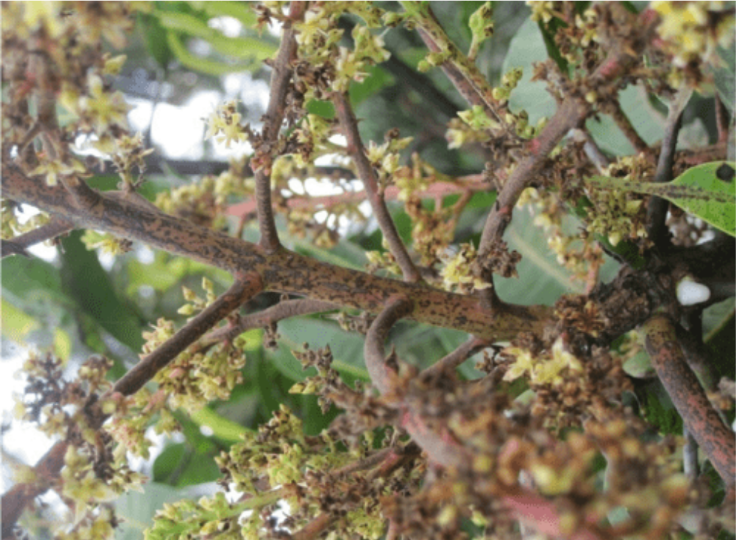
Identification, Symptoms and Management Mango blossom blight is a fungal disease that affects mango flowers and young developing shoots. It can cause significant flower loss, poor fruit set and reduced mango yields, particularly when conditions are warm, humid and wet during the flowering period. The disease should be managed early because damage to the flowers can directly affect the number of fruits that eventually develop. Symptoms of Mango Blossom Blight The disease mainly affects the flower panicles, although young shoots and other tender tissues may also be affected. Common symptoms include: ● Browning or blackening of flower panicles. ● Flowers drying and dying before fruit set. ● Dark lesions on flower stalks. ● Blighted or dried flower clusters. ● Premature flower drop. ● Reduced fruit set. ● In severe cases, drying back of young shoots. Under favourable conditions, the disease can spread rapidly through the flowering panicles. Conditions That Favor Mango Blossom Blight Mango blossom blight is favoured by high humidity, frequent rainfall, prolonged wetness and poor air circulation within the canopy. Disease pressure can therefore be particularly high during wet flowering periods. Management of Mango Blossom Blight Effective management involves regular monitoring, good orchard sanitation, canopy management and timely fungicide application. Recommended Fungicides The following fungicides are included in the management programme: Absolute Star 10 ml Chariot 20 ml Pearl 20 ml Greencop 50 gm Trinity Gold 50 gm Ortiva 20 ml Always follow the current product label for the approved crop, target disease, application rate, pre-harvest interval and safety requirements. Cultural Management Practices 1. Monitor During Flowering Begin regular inspection of mango trees as flower panicles emerge. Pay particular attention to early signs of browning, drying or blackening of flowers. 2. Maintain Good Canopy Management Prune appropriately to improve air circulation and light penetration within the mango canopy. A well-managed canopy dries faster after rainfall or dew, reducing conditions favourable for fungal infection. 3. Remove Infected Material Where practical, remove severely infected flower panicles and other affected plant material and dispose of them properly to reduce sources of infection. 4. Maintain Orchard Sanitation Remove fallen leaves, flowers and diseased plant material from around the orchard where appropriate. 5. Apply Fungicides at the Right Time Fungicide protection is most useful when applied before disease becomes severe, particularly when weather conditions are favourable for infection. Protecting flowers during the flowering period is important because severe blossom infection can result in poor fruit set.
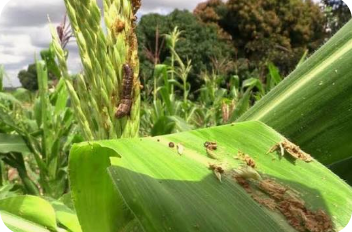
Identification, Crops Affected, Damage and Management Fall armyworm (FAW), Spodoptera frugiperda, is a highly destructive insect pest that mainly attacks maize but can also feed on many other crops. It can cause serious yield losses, especially when infestations occur during the early stages of crop development. Crops Affected by Fall Armyworm. Although maize is one of its major hosts, fall armyworm is a polyphagous pest, meaning it can feed on many different plant species. Crops that can be affected include: ● Maize ● Sorghum ● Wheat ● Rice ● Millet ● Sugarcane ● Other grasses and cultivated crops The severity of infestation varies depending on the crop, growth stage and prevailing environmental conditions. Fall armyworm larvae vary in colour from light green to brown and usually have longitudinal stripes along the body. A key identification feature is the inverted Y-shaped marking on the head. Mature larvae also have four dark spots arranged in a square-like pattern on the last abdominal segments. Adult moths are mainly active at night. Therefore, regular inspection for eggs, young larvae and feeding damage is important for early detection. Damage Caused by Fall Armyworm Young larvae initially feed on the leaf surface, creating small transparent or window-like patches. As they grow, they move into the maize whorl where they cause more severe feeding damage. Common signs of infestation include:● Small holes and window-like patches on leaves. ● Irregular feeding damage. ● Ragged or heavily damaged leaves. ● Fresh frass (insect droppings) inside the maize whorl. ● Damage to the growing point. ● Reduced plant growth. ● Severe damage that may result in plant death, especially in young plants. Young larvae are generally easier to control because they are more exposed. Older larvae may be difficult to reach when they are deep inside the maize whorl. Natural Enemies of Fall Armyworm Fall armyworm has several natural enemies that can help reduce its population in the field. Protecting these beneficial organisms is an important part of integrated pest management. Examples include: Birds Some insect-eating birds feed on fall armyworm larvae and moths. Maintaining a healthy farm ecosystem can help encourage their presence. Earwigs Earwigs are beneficial predators that can feed on fall armyworm eggs and young larvae. Praying Mantises Praying mantises are generalist predators that can feed on various insects, including caterpillars and moths. Bats Bats can feed on adult moths, particularly during their active periods at night. Their presence can contribute to natural suppression of adult populations. Cultural and Biological Management Fall armyworm management should not rely entirely on insecticides. Combining cultural practices, natural enemies and timely chemical control can provide better and more sustainable management. 1. Early and Timely Planting Planting within the recommended planting window can help crops establish and develop before pest pressure becomes severe. Avoid unnecessarily delayed planting where local conditions favour fall armyworm build-up. 2. Hand Picking and Destruction During early infestations, farmers can inspect plants and hand-pick and destroy egg masses and young larvae where practical, particularly on small farms. Egg masses should not simply be moved to another part of the field. They should be properly destroyed or disposed of to prevent hatching. 3. Intercropping with Legumes Intercropping maize with suitable legumes such as beans can help increase crop diversity and may make the crop less attractive to egg-laying adult female moths. The presence of different plant species can interfere with host-finding behaviour and may reduce the likelihood of female moths laying eggs on maize. However, intercropping should be used as part of an integrated programme rather than relied upon as a stand-alone method. 4. Regular Field Scouting Inspect maize regularly, particularly the whorl and newly emerging leaves. Look for: ● Egg masses ● Small caterpillars ● Window-like feeding marks ● Holes in leaves ● Fresh frass inside the whorl Early detection makes management much easier. Chemical Management Where fall armyworm populations reach damaging levels, appropriate insecticides can be used as part of an integrated management programme. The following products are included in the management programme: Escort 25ml Relay 4ml Amigad 10g Benzoron 3ml Nomax 20ml Diazol 40ml Duduthrin 60ml Cyclotron 10ml Pentagon 10ml Umeme Top 10ml Important Application Note For improved spray coverage and performance, a suitable sticker/wetter/spreader may be used together with the insecticides. The following adjuvants are included in the spray programme: Aquawet – 10 ml/20lof water Integra – 3 ml/20l of water Golden Leaf – 3 ml/20l of water HiSpied – 3 ml/20l of water
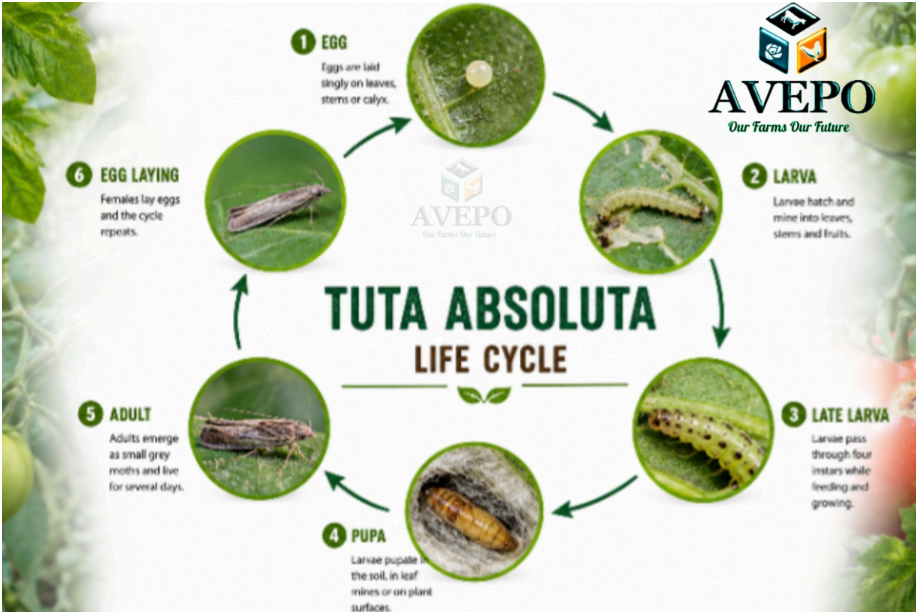
Identification, Crops Affected, Damage and Management Tuta absoluta, commonly known as tomato leaf miner or tomato pin worm, is one of the most destructive insect pests of tomato. It is a small moth whose larvae feed inside leaves, stems and fruits, making the pest difficult to manage once an infestation becomes established. The pest can multiply rapidly under favourable conditions and cause significant losses in both open-field and protected tomato production. Crops Affected by Tuta absoluta Tuta absoluta mainly attacks crops in the Solanaceae family, particularly: ● Tomato ● Potato ● Eggplant ● Other related solanaceous crops Tomato is one of its most important hosts. Identification Adult Moths Adult Tuta moths are small, greyish-brown moths with narrow wings. They are more active during the evening and night and may hide among the foliage during the day. Larvae The larvae are small caterpillars that feed inside plant tissues. They can be difficult to detect because they spend much of their time protected inside leaves, stems and fruits. Eggs The eggs are very small and are usually deposited on leaves, stems and other plant parts, making them difficult to identify without close inspection. Damage Caused by Tuta absoluta The larval stage causes the greatest damage. Larvae penetrate leaves, stems and fruits and create galleries as they feed. Common signs of infestation include: ● Irregular mines or tunnels on leaves. ● Transparent or brown patches on leaves. ● Leaf drying and premature leaf drop. ● Damage to young shoots and growing points. ● Tunnels inside stems. ● Holes and tunnels in fruits. ● Fruit rotting following secondary infections. ● Reduced fruit quality and marketability. ● Severe infestations can cause significant yield losses. Fruit damage is particularly serious because it directly reduces the amount of marketable produce. Management of Tuta absoluta Effective management requires an integrated pest management approach combining regular scouting, trapping, field sanitation, removal of infested plant material and timely insecticide application. Recommended Insecticides The following products and rates are included in the management programme: Tihan 10 ml Fenari 10 ml Relay 4 ml Benzoron 3ml Occasion Star 3ml Campostella 9ml Proper timing is important. Control is generally more effective when the pest is detected early, before extensive leaf mining and fruit damage occur. Tuta Traps Tuta traps can be used to monitor and reduce adult Tuta moth populations. The traps help farmers: ● Detect the presence of Tuta moths early. ● Monitor changes in pest populations. ● Reduce the number of adult moths in the production area. ● Support timely decision-making on pest management. Traps are most effective when incorporated into an integrated management programme rather than being relied upon as the only control method. Nimbecidine in Tuta Management Nimbecidine can be incorporated into the management programme alongside recommended insecticides. Nimbecidine contains neem-based compounds and can contribute to pest management through several effects, including: ● Insect growth regulation ● Sterilant effects ● Oviposition deterrence, discouraging female moths from laying eggs ● Anti-feeding activity, reducing feeding by developing larvae Using Nimbecidine as part of an integrated programme can help reduce pest pressure and may support longer spray intervals, depending on pest pressure, crop stage and environmental conditions. Do not automatically extend spray intervals simply because Nimbecidine has been added. Always scouting the crop and adjusting the spray programme according to pest population and product-label recommendations. Cultural and Preventive Management 1. Regular Scouting Inspect tomato plants frequently, paying particular attention to young leaves, growing points, stems and fruits. Look for fresh mines, larvae and damaged fruits. 2. Use Tuta Traps Install appropriate Tuta traps early in the production cycle to monitor adult moth activity and detect increasing populations. 3. Remove Infested Plant Material Where practical, remove heavily infested leaves and destroy them properly. Do not leave removed plant material beside the crop because larvae can continue developing. 4. Destroy Infested Fruits Collect and destroy severely infested fruits that cannot be marketed. Leaving them in the field allows the pest to complete its development and produce another generation. 5. Maintain Field Sanitation Remove crop residues and volunteer tomato plants after harvesting. These can provide shelter and breeding sites for Tuta absoluta. 6. Control Alternative Hosts Manage weeds and other host plants around the field that may harbour the pest between production cycles. Insecticide Resistance Management Tuta absoluta is capable of developing insecticide resistance, particularly where the same insecticide or mode of action is repeatedly used. For better long-term control: ● Rotate insecticides with different IRAC modes of action. ● Avoid repeated use of the same product or mode of action. ● Apply products at the recommended label rate. ● Avoid under-dosing. ● Scout regularly and spray when intervention is justified. ● Observe the recommended application interval and pre-harvest period. Use of Sticker/Wetter/Spreader Where permitted by the product label, a suitable sticker/wetter/spreader can be used with insecticides to improve spray wetting, spreading, coverage and retention on plant surfaces. Adjuvants included in the spray programme are: ● Aquawet – 10 ml/20 L ● Integra – 3 ml/20 L ● Golden Leaf – 3 ml/20 L ● HiSpied – 3 ml/20 L Farmer Tip Scout early, trap adult moths and act before Tuta absoluta becomes established.