Fall Armyworm (Spodoptera frugiperda)
Pest Control
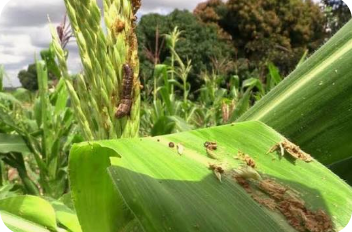
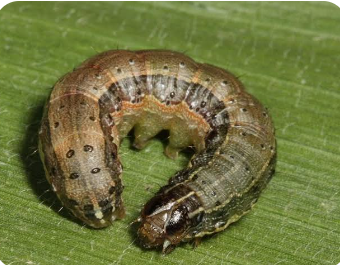
Identification, Crops Affected, Damage and Management Fall armyworm (FAW), Spodoptera frugiperda, is a highly destructive insect pest that mainly attacks maize but can also feed on many other crops. It can cause serious yield losses, especially when infestations occur during the early stages of crop development. Crops Affected by Fall Armyworm. Although maize is one of its major hosts, fall armyworm is a polyphagous pest, meaning it can feed on many different plant species. Crops that can be affected include: ● Maize ● Sorghum ● Wheat ● Rice ● Millet ● Sugarcane ● Other grasses and cultivated crops The severity of infestation varies depending on the crop, growth stage and prevailing environmental conditions. Fall armyworm larvae vary in colour from light green to brown and usually have longitudinal stripes along the body. A key identification feature is the inverted Y-shaped marking on the head. Mature larvae also have four dark spots arranged in a square-like pattern on the last abdominal segments. Adult moths are mainly active at night. Therefore, regular inspection for eggs, young larvae and feeding damage is important for early detection. Damage Caused by Fall Armyworm Young larvae initially feed on the leaf surface, creating small transparent or window-like patches. As they grow, they move into the maize whorl where they cause more severe feeding damage. Common signs of infestation include:● Small holes and window-like patches on leaves. ● Irregular feeding damage. ● Ragged or heavily damaged leaves. ● Fresh frass (insect droppings) inside the maize whorl. ● Damage to the growing point. ● Reduced plant growth. ● Severe damage that may result in plant death, especially in young plants. Young larvae are generally easier to control because they are more exposed. Older larvae may be difficult to reach when they are deep inside the maize whorl. Natural Enemies of Fall Armyworm Fall armyworm has several natural enemies that can help reduce its population in the field. Protecting these beneficial organisms is an important part of integrated pest management. Examples include: Birds Some insect-eating birds feed on fall armyworm larvae and moths. Maintaining a healthy farm ecosystem can help encourage their presence. Earwigs Earwigs are beneficial predators that can feed on fall armyworm eggs and young larvae. Praying Mantises Praying mantises are generalist predators that can feed on various insects, including caterpillars and moths. Bats Bats can feed on adult moths, particularly during their active periods at night. Their presence can contribute to natural suppression of adult populations. Cultural and Biological Management Fall armyworm management should not rely entirely on insecticides. Combining cultural practices, natural enemies and timely chemical control can provide better and more sustainable management. 1. Early and Timely Planting Planting within the recommended planting window can help crops establish and develop before pest pressure becomes severe. Avoid unnecessarily delayed planting where local conditions favour fall armyworm build-up. 2. Hand Picking and Destruction During early infestations, farmers can inspect plants and hand-pick and destroy egg masses and young larvae where practical, particularly on small farms. Egg masses should not simply be moved to another part of the field. They should be properly destroyed or disposed of to prevent hatching. 3. Intercropping with Legumes Intercropping maize with suitable legumes such as beans can help increase crop diversity and may make the crop less attractive to egg-laying adult female moths. The presence of different plant species can interfere with host-finding behaviour and may reduce the likelihood of female moths laying eggs on maize. However, intercropping should be used as part of an integrated programme rather than relied upon as a stand-alone method. 4. Regular Field Scouting Inspect maize regularly, particularly the whorl and newly emerging leaves. Look for: ● Egg masses ● Small caterpillars ● Window-like feeding marks ● Holes in leaves ● Fresh frass inside the whorl Early detection makes management much easier. Chemical Management Where fall armyworm populations reach damaging levels, appropriate insecticides can be used as part of an integrated management programme. The following products are included in the management programme: Escort 25ml Relay 4ml Amigad 10g Benzoron 3ml Nomax 20ml Diazol 40ml Duduthrin 60ml Cyclotron 10ml Pentagon 10ml Umeme Top 10ml Important Application Note For improved spray coverage and performance, a suitable sticker/wetter/spreader may be used together with the insecticides. The following adjuvants are included in the spray programme: Aquawet – 10 ml/20lof water Integra – 3 ml/20l of water Golden Leaf – 3 ml/20l of water HiSpied – 3 ml/20l of water
Comments & Reviews
No comments yet. Be the first to share your thoughts on this tip.
Leave a Comment
Comments are checked by our team before appearing publicly.