

Expert Guide to Successful Maize Farming
General
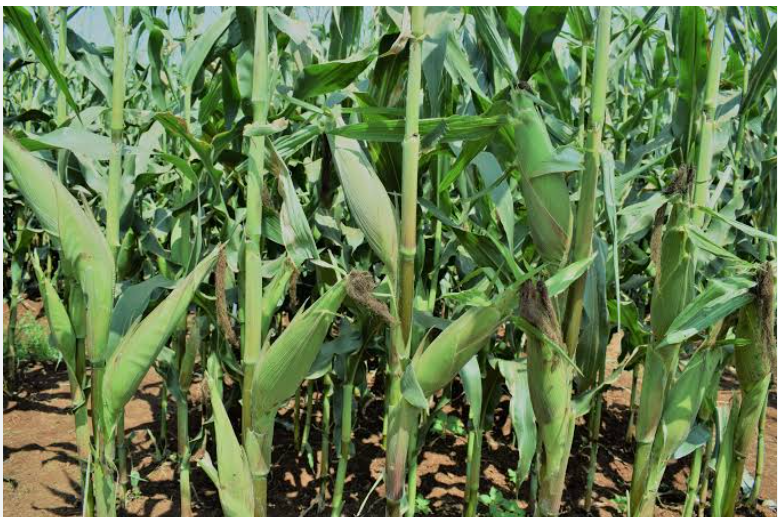
Maize is one of Kenya's most important food and commercial crops. However, good yields do not happen by chance. Successful maize production starts with proper land preparation, the right variety, correct spacing, balanced nutrition, timely weed and pest management, and proper post-harvest handling. This guide provides a practical maize production programme from land preparation to storage 1. Land Preparation Good maize production starts with a well-prepared field. The objective is to create a suitable seedbed that allows good germination, root development, water infiltration and effective weed management. Before planting: ● Clear the field of unwanted vegetation. ● Prepare a fine, well-drained seedbed. ● Correct soil acidity where necessary. ● Incorporate well-decomposed organic manure where available. ● Conduct a soil test to determine soil fertility and fertilizer requirements. Herbicides for Land Preparation Where herbicides are appropriate, farmers can use products such as: ● Roundup Turbo ● Catapult ● Weedless ● Kausha ● Weedal ● Kick-Out ● Roundup Classic ● Rid-Out ● Debar Always follow the product label regarding application rate, target weeds, safety precautions and pre-planting requirements. 2. Soil Testing and Fertilizer Selection A soil test should be done before planting to establish the nutrient status of the field. A soil test helps determine: ● Soil pH ● Nitrogen status ● Phosphorus status ● Potassium status ● Sulphur and micronutrient levels ● Lime requirements ● Suitable fertilizer options Don't apply fertilizer based on guesswork. Apply according to your soil-test results and the nutrient requirements of your crop. The fertilizer requirement of one farm can be very different from another, even when the same maize variety is planted. 3. Choosing the Right Maize Variety There is no single maize variety suitable for every farm. Variety selection should consider agro-ecological zone, altitude, rainfall pattern, maturity period, disease tolerance, drought conditions and market requirements. Maize varieties Some maize varieties available to farmers include: 1. SC Duma 447 2. SC Duma 43 3. DK8031 4. DKC8033 5. PAN 3M-05 6. DH04 7. TSAVO 4141 8. TOSHEKA MH401 9. MITUKI KDH3 10. H513 11. SAWA 12. SC Pundamilia 555 13. Pioneer 30G19 14. DK777 15. HARAKA 101 16. HARAKA 301 17. TSAVO 3106 18. RS 5101 19. ADV2308W 20. DK9089 21. ETG MH601 22. SC Tembo 73 23. ETG MH401 24. SC Simba 61 or other variety(ies) recommended for your area. How to choose Before purchasing seed, consider questions like: Where am I farming? → What rainfall do I expect? → How long is my growing season? → What maturity period do I need? → What pests and diseases are common in my area? → What does my market require? 4. Planting Plant maize when there is adequate and reliable soil moisture. Timely planting allows the crop to establish properly and take advantage of the available growing season. Recommended spacing ● Between rows: 75 cm ● Between plants: 25–30 cm ● Planting depth: 5–7 cm(not too deep and not too shallow) ● Seed placement: 1 seed per planting hole Approximate plant population Spacing Approximate population/acre 75 cm × 30 cm 17,800 plants 75 cm × 25 cm 21,300 plants The exact spacing and plant population should consider the variety, agro-ecological zone, soil fertility, rainfall and target yield. 5. Fertilizers for Planting The choice of planting fertilizer should be guided by soil-test results. Recommended planting fertilizers include: ● Diammonium Phosphate (DAP) ● NPK MiCROP Planting ● NPK KALI Planting ● NPSB ● Triple Superphosphate (TSP) or any other suitable fertilizer(s) recommended by your field extension officer DAP Supplies nitrogen and phosphorus and can be used where soil conditions and test results indicate a need for these nutrients. NPK MiCROP Planting Provides multiple nutrients required for early crop establishment. NPK KALI Planting Provides a combination of nutrients, including potassium, where required. NPSB Provides nitrogen, phosphorus, sulphur and boron, making it useful where these nutrients are deficient. TSP A concentrated phosphorus fertilizer that can be considered where phosphorus is required. NOTE: The best planting fertilizer is not necessarily the most popular one. It is the one that supplies the nutrients your soil and crop actually need. 6. Weed Management Weeds compete with maize for water, nutrients, sunlight and space. Early weed competition can significantly reduce crop performance. Effective weed management combines: ● Good land preparation ● Timely planting ● Proper crop spacing ● Early weed control ● Manual/mechanical weeding where appropriate ● Correct use of herbicides Selective Herbicides Examples include: ● Governor 580SE ● Kolopa ● Srasher ● Succeed 280OD ● TingaTinga The choice of herbicide depends on the weed species, weed growth stage, maize growth stage and product label recommendations. 7. Crop Nutrition During Growth Maize requires nutrients throughout its growth cycle. Fertilizer application should therefore not end at planting. Good nutrition supports: ● Strong vegetative growth ● Root development ● Healthy leaves ● Tasseling and flowering ● Grain formation ● Grain filling Foliar fertilizers Where foliar nutrition is appropriate, farmers can use products such as: ● YaraVita Crop Boost ● Lavender Total ● Wuxal Macromix ● Maxigrow ● Agrofeed Plus OR any other suitable foliar fertilizers Foliar fertilizers should complement good soil fertility management, not replace proper basal and top-dressing fertilization. 8. Top-Dressing Nitrogen demand increases as maize develops, particularly during the vegetative growth stage. Recommended top-dressing fertilizers include: ● Calcium Ammonium Nitrate (CAN) ● MiCROP Topdressing ● Kynoch Plus "S" ● Urea ● YaraVera Amidas ● And other suitable nitrogen fertilizers. The choice and rate should also depend on: 1. Soil-test results 2. Fertilizer applied during planting 3. Crop condition 4. Expected yield 5. Soil type and rainfall Apply top-dressing when there is adequate soil moisture, 5cm away from the plant stem. 9. Fall Armyworm{FAW} Management Fall Armyworm is an important maize pest. Early detection and timely management are critical. What should farmers look for? Regularly inspect the maize, especially the whorl, for: ● Feeding damage on young leaves ● Ragged or windowed leaves ● Caterpillars ● Fresh frass inside the whorl ● Damage to growing points Products for Fall Armyworm control Examples include: ● Belt — 10 ml/20 L ● Relay — 4 ml/20 L ● Benzoron — 3 ml/20 L ● Amigad — 10 g/20 L ● Escort — 25 ml/20 L ● Rapid — 10 ml/20 L ● Raptor — 25 ml/20 L Or other registered options Best practice Scout → identify → assess → select → apply correctly. Do not spray simply because other farmers are spraying. 10. Other Important Maize Pests Farmers should also scout for: Cutworms Can attack young plants around the soil surface. Stalk borers Can cause dead-heart symptoms, stem damage and lodging. Aphids Suck plant sap and may cause curling, yellowing and reduced plant vigor. Early detection makes pest management more effective. 11. Maize Diseases Important maize diseases include: ● Maize Lethal Necrosis Disease (MLND) ● Maize smut ● Northern leaf blight Disease management Use: ● Certified seed ● Suitable varieties ● Good field sanitation ● Crop rotation where practical ● Proper crop nutrition ● Regular scouting ● Appropriate pest-vector management For diseases such as MLND, prevention and integrated management are more effective than waiting until the crop is severely affected. 12. Water and Moisture Management Maize requires adequate moisture throughout its growth cycle, particularly during: ● Germination ● Early vegetative growth ● Tasseling ● Silking ● Grain filling Farmers should conserve available moisture through appropriate soil-management practices. Where irrigation is available, water should be managed according to crop requirements and prevailing conditions. 13. Harvesting Harvesting time depends on the variety, planting date, weather conditions and intended use. For dry grain production, maize should be allowed to reach physiological maturity before harvesting. Avoid harvesting immature maize Premature harvesting can result in: ● High grain moisture ● Higher drying costs ● Poor storage quality ● Increased risk of mould development Harvest mature maize and dry it properly before storage. For farmers targeting the green maize market can harvest earlier, when the cobs have reached the appropriate stage for fresh consumption. 14. Post-Harvest Handling Good production can be wasted through poor post-harvest handling. After harvesting: 1. Sort the maize. 2. Remove damaged and diseased cobs. 3. Dry the maize adequately. 4. Shell where appropriate. 5. Clean the grain. 6. Protect against storage pests. 7. Store in a clean, dry and secure facility. Proper drying helps reduce mold growth, grain deterioration and storage losses. 15. Protecting Stored Maize Farmers can use chemical or non-chemical storage methods. Chemical Preservation Examples of grain-storage protectants include: ● Actellic Super ● Sumicombi ● Skana Super ● President Gold Or other registered grain protectants. Use 50 g per 90 kg of shelled maize, and for cob maize, sprinkle the dust 30cm-49cm layer of maize. 16. Non-Chemical Storage Farmers who prefer a non-chemical option can use hermetic storage bags. Hermetic bags create an airtight environment that limits oxygen availability and helps suppress insect activity. For best results: ● Dry grain properly before storage. ● Use clean, undamaged bags. ● Do not mix new grain with infested grain ● Store bags in a clean, dry place. ● Regularly inspect the storage area.
Comments & Reviews
Ber ndi!!
Leave a Comment
Comments are checked by our team before appearing publicly.